BUILDING A TASHI GOMANG STUPA
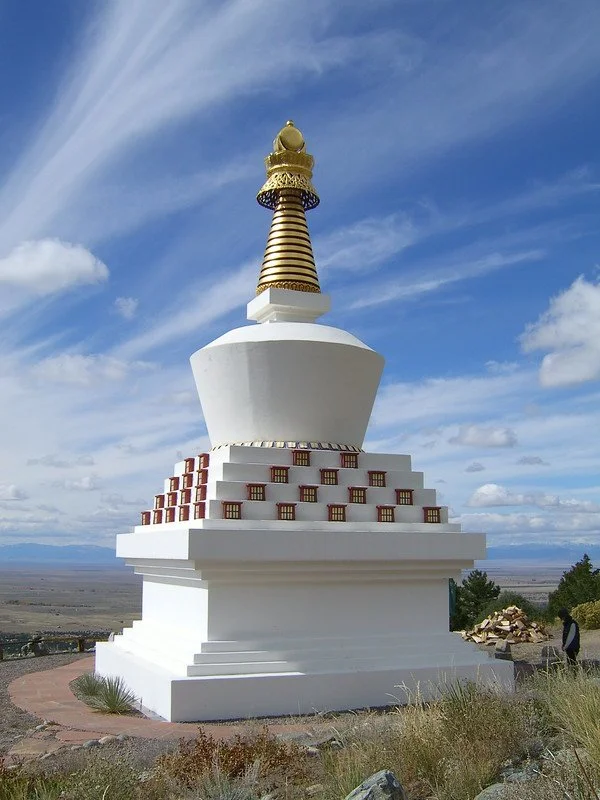
The Tashi Gomang Stupa in Crestone, CO
Image Credit: “Tashi Gomang Stupa - Crestone Colorado” by Madjag, CC BY-NC-ND 2.0
The “Stupa of Many Auspicious Doors”
THE TASHI GOMANG STUPA, one of the Eight Enlightenment stupa styles, is identifiable by its many small doors within the terraced quadrants below the “vase” (central reliquary chamber).
SYMBOLISM
Lord Buddha’s First Teachings: The Four Truths, Eightfold Path, Six Perfections and Twelve Interdependent Links.
Far-Reaching Teachings: The Buddhadharma will spread far and wide to benefit all beings.
KUMBUM CHÖRTEN
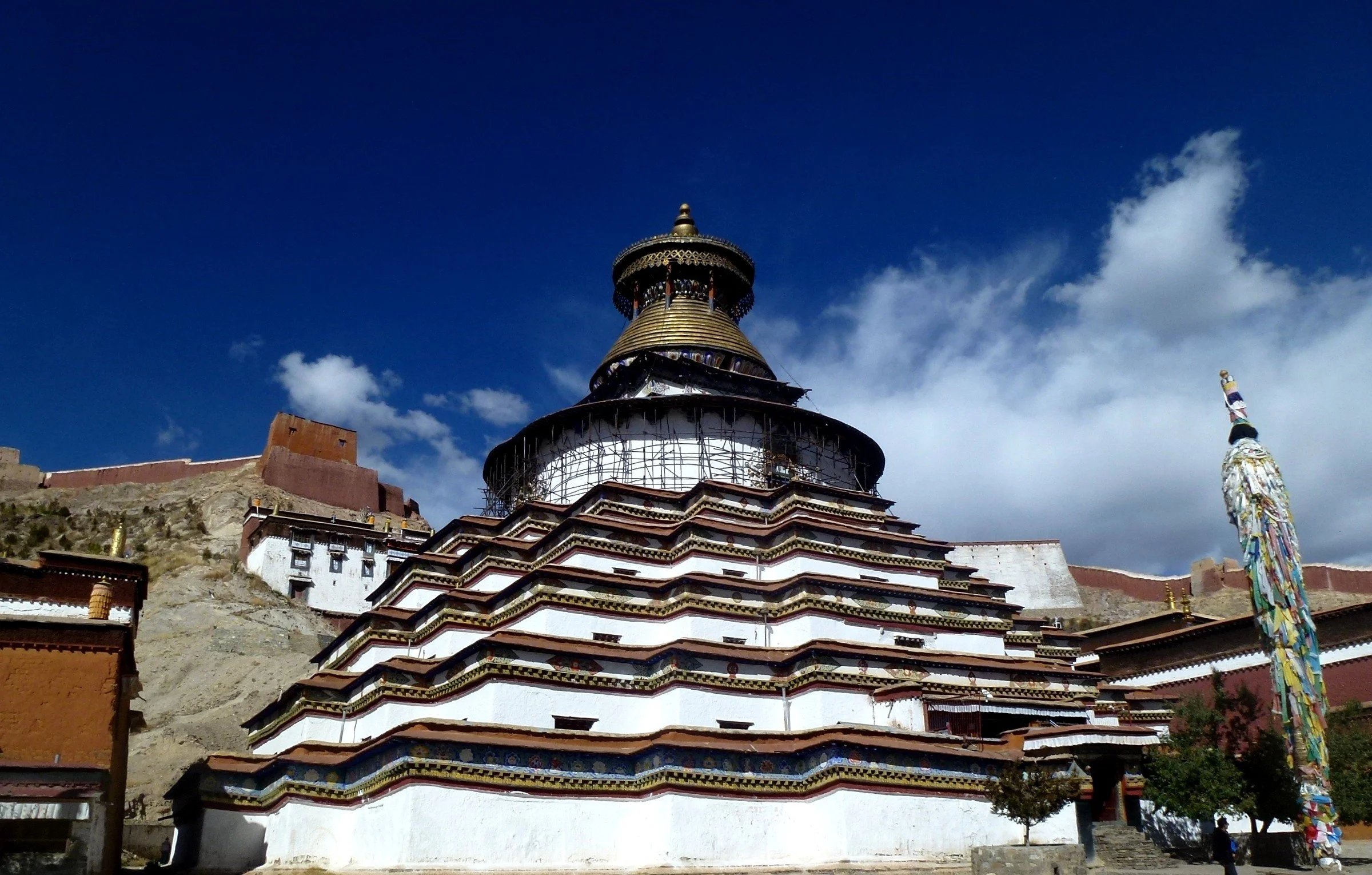
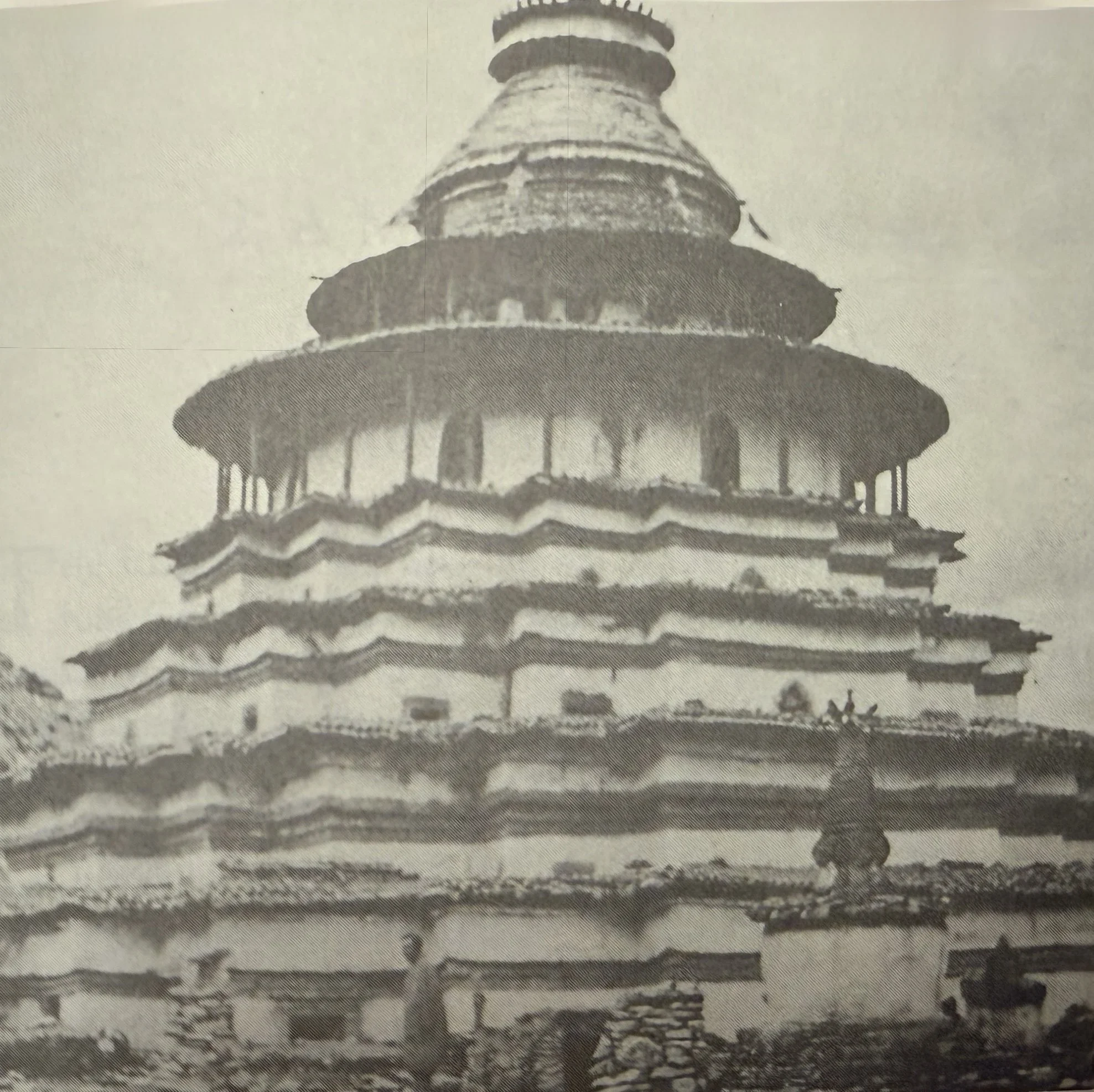
Among the many Tashi Gomang stupas found in the Buddhist world, a few stand out as especially unique. The Kumbum Chörten style has hemispherical dome-shaped “vase,” many angular cutouts in the terraced faces (creating an almost circular footprint), and an exceptionally wide conical spire relative to its height.
The two largest examples are the Gyantse Kumbum and the Chung Riwoche Kumbum in Tibet, each standing nearly 100 ft. high.
Rinpoche has stated that we should build a Kumbum style stupa…
and that it should be completed by September, 2027.
This ambitious and meritorious undertaking requires help.
We invite you to contribute!
A 32 FOOT HIGH KUMBUM-STYLE STUPA IN TULAROSA, NEW MEXICO
Why Here? Why Now?
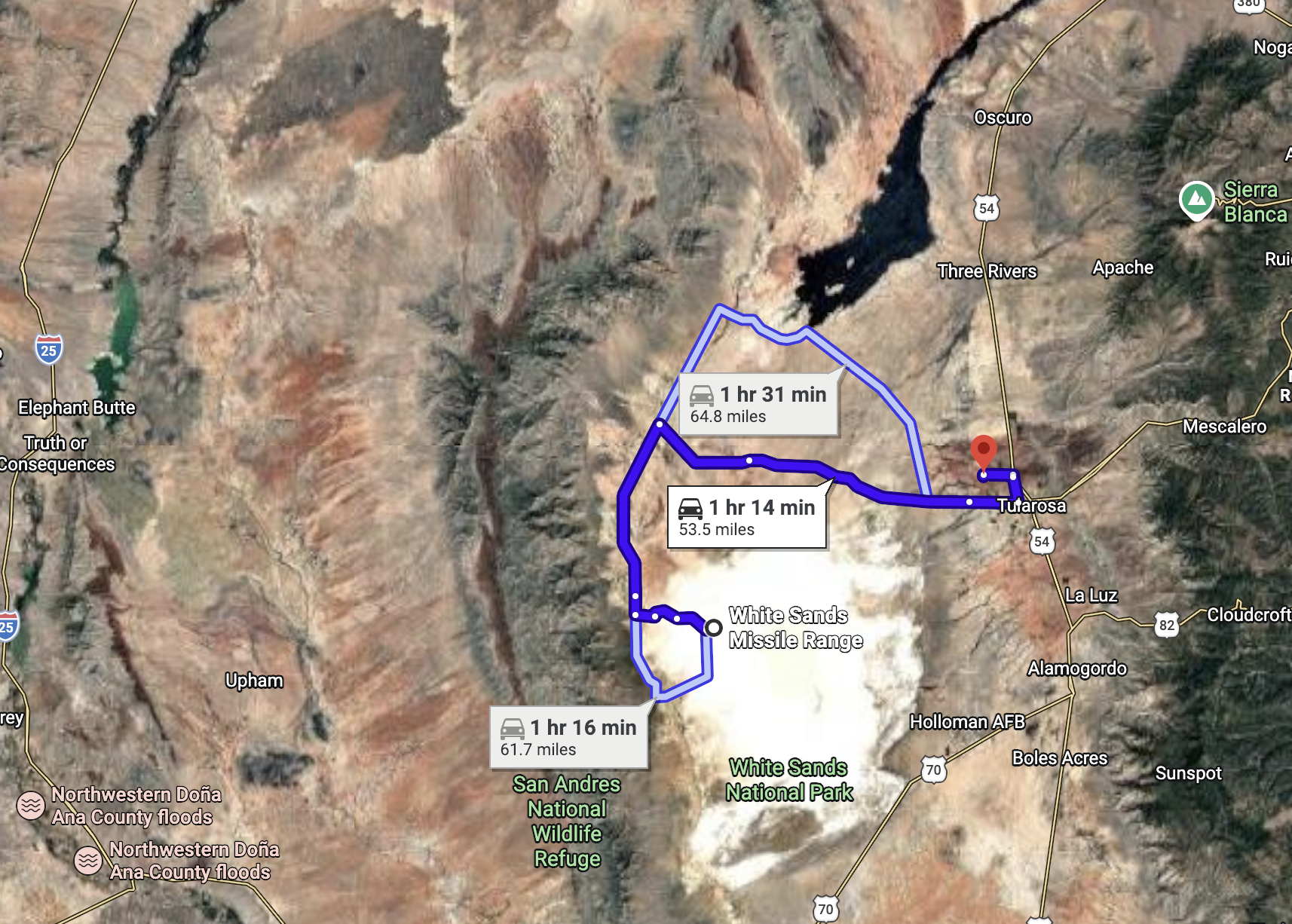
TULAROSA, NEW MEXICO was identified by Bhakha Tulku Rinpoche decades ago as a special place for Dharma activities. More than 25 years ago, Rinpoche established a Dharma center, built a temple, and began spending significant amounts of time here.
Rinpoche is well-known for his Tibetan calligraphy, especially in the form of painted and carved MANTRA STONES. He has created thousands of mantra stones, mostly with the MANI mantra of compassion (OM MANI PEME HUNG) and the mantra of Guru Rinpoche. Most of his recent stones are here in Tularosa, to benefit the environment, animals, and agriculture around the world.
THE WORLD’S FIRST NUCLEAR WEAPON TEST occurred near Tularosa in 1945, and the largest U.S. Military base is located at White Sands, where weapons testing is ongoing.
Above all, it is through his wisdom vision that Rinpoche has chosen this very place to build the Stupa.
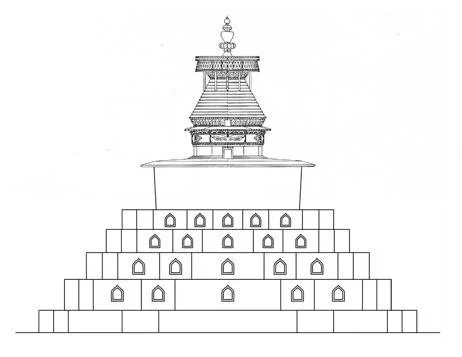
Preliminary concept rendering of the Tularosa Tashi Gomang Stupa
Healing a World in Urgent Need
CONFLICT, POVERTY, HUNGER, AND ENVIRONMENTAL DESTRUCTION continue to rage in our world.
In the Vajrayana Buddhist tradition, building stupas is one of the most powerful methods to pacify such negative influences.
The stupa’s blessings radiate throughout space, creating the conditions for love, compassion, wisdom, healing and peace to prevail.
BHAKHA RINPOCHE has stated that the time is now to build this particular stupa in this particular location.
Let us all work together to fulfill his compassionate vision.
May all beings be free!
Many Auspicious Doors, Many Ways to Support
DONATE
Funds
Construction materials
Specialized skills (building, art, etc.)
Dharma items (to place in the stupa)
Time (volunteer onsite or online)
NETWORK
Write grants
Locate potential donors
Host a fundraising event
Talk to others who can volunteer
Tell your teachers and sangha
MORE ABOUT STUPAS
Wisdom and Compassion Made Visible
A STUPA (Tib. Chörten) is an ancient form of Buddhist reliquary architecture. Stupas house the holy remains of enlightened or highly realized teachers, in addition to countless representations of enlightened body, speech and mind that are placed inside.
Body: hundreds of statues, thangkas (scroll paintings) and tsa tsas (small molds) of Buddhas and Bodhisattvas.
Speech: thousands of volumes of Dharma scriptures and many millions of printed mantras on tightly rolled scrolls.
Mind: mirrors, crystals, ritual implements like bells, vajras, phurba daggers, and miniature clay stupas.
A Source of Blessings
THE SHEER CONCENTRATION of sacred objects, combined with the sacred design and compassionate motivation for its construction, makes a stupa a powerful source of blessings for all who see, touch, or circumambulate it.
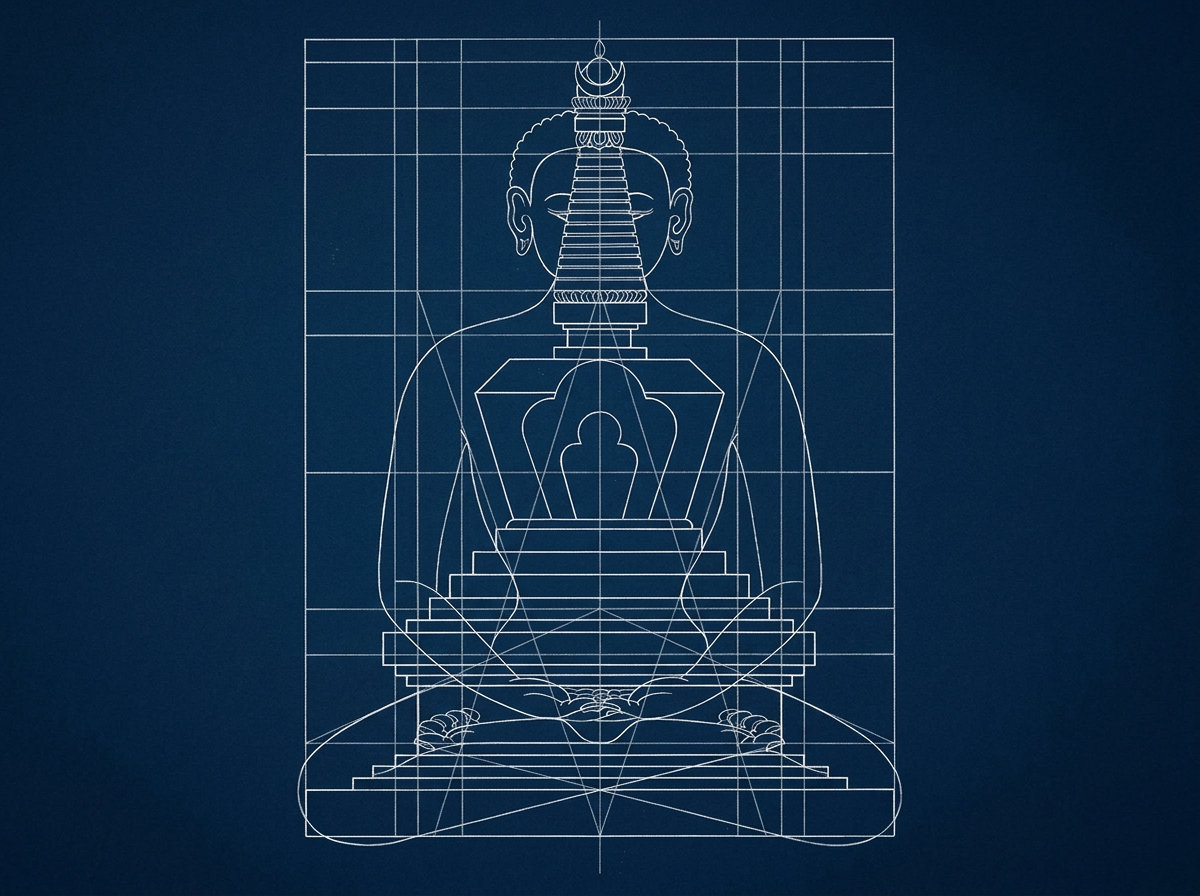
SACRED GEOMETRY: Every aspect of a stupa is precisely constructed in strict accordance with ancient principles of sacred proportion and Vajrayana Buddhist symbolism. The design itself is a spiritual teaching—from the stepped levels, to the multitiered spire, and the parasol, crescent moon and sun at the apex represent the stages of the path culminating in the state of perfectly enlightened Buddhahood.